Friday, February 18, 2011

Last thoughts from RSA Conference


The RSA Conference is now over. I’ve been coming to a lot of these and I have to say that this is one of the better ones. I saw a lot of innovation, new ideas, and general buzz at the show. It felt great to see security starting to get out of its doldrums.

I loved seeing Art Coviello on stage again. I liked Art a lot when he was at RSA and he has played a major role in building a $700M business. It is a personal note, but it was pretty cool this afternoon seeing a Security Dynamics alum (via CrossComm) sitting with a President!

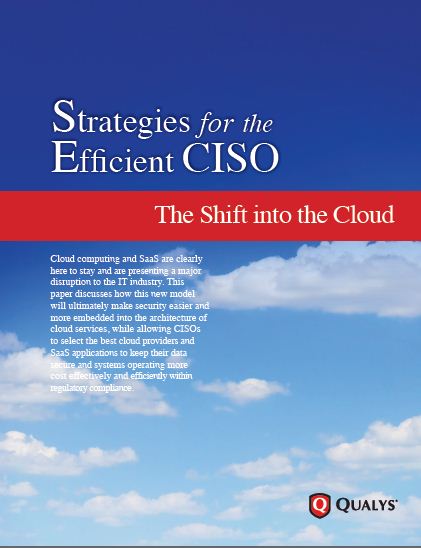
I also liked the fact that security is starting to catch on to the concept of providing information to IT and network operations teams. Security sees everything so why not communicate some of what it sees to the rest of the IT organization? The next-gen firewall conversations, usually centered on Palo Alto Networks is a perfect example of this. Another is a whitepaper that Qualys was featuring that emphasizes the strategic business efficiencies to be gained from secure cloud services.

SonicWALL also surprised me with a big honkin’ box that is loaded with application level logic. That company has come a long ways from the one that averaged 1.6 boxes per small business when I first met them.

Time to run for the airport. It was a good week – catching up with lots of friends, having great security conversations, and contributing to the Trusted Computing Group and Anti-malware sessions!

Thursday, February 17, 2011

Top 5 observations at the mid-point of RSA week


Top 5 observations at the mid-point of RSA week, or what seems to be themed NG RSA:

1. One of the fun events of RSA week happens before the show commences – the Innovation Sandbox. This event, in its second year, features 10 young companies, each staffing a small demo station and then presenting their idea on stage to a panel of judges and the audience. This year's winner was Invincea for their secure browser protection. The Innovation Sandbox experience also has a very cool idea of “speed dating” where aspiring entrepenuers get a few minutes to pitch their idea with an experienced VC. That is the kind of networking activity that made the RSA Conference famous back in the 90’s and it is awesome to see the return to supporting new innovative ideas. I recommend that every “A” round security company enter the competition next year.

2. Cisco is back to tackling big security problems with the unveiling of SecureX, their next generation security architecture. SecureX applies context gathered from network traffic and the presence of more than 150 million VPN agents to make smarter security decisions in Cisco devices. Cisco needs some help articulating a vision of how SecureX will change the life of security, IT and networking teams but there is a ton of potential and I think of this more as an exciting start for 2011.

3. According to Quest Software, “One in ten IT Professionals (10%) admit that they have accounts from previous jobs where they can still access systems even after they’ve left the organization.” For years the industry believed that Single Sign-On would be a big productivity gain by making it easier for users to connect to applications, and perhaps reduce service desk calls by reducing the number of passwords to be managed. However, perhaps the ability to easily de-provision user accounts with a single click will provide incentive for security teams to look more closely at SSO (and to be worried less about losing “the keys to the kingdom”).

4. Symantec was the company that perhaps has given me the greatest positive surprise this week with the performance and virtualization enhancements announced in SEP 12 . It is great to see companies like Symantec and Trend Micro getting out ahead of the curve when it comes to leveraging virtualization and the cloud. Symantec Endpoint Protection 12 has significant improvements based on their Insight intelligence that will keep Symantec a force for some time. The following chart is snipped out of AV Comparatives real world testing report – I have not had time to read the report for bias, but however you cut it these numbers look good for Symantec.

5. Lumension is doing some nice integration work with device discovery, application whitelisting, anti-virus, and patching features. It is very clear to me that some form of whitelisting is an essential layer of defense – it just makes too much sense to look one way while signature approaches look in the other (or vice-versa). Integrating the capabilities into an end-to-end system can fundamentally help the way IT manages endpoints and conducts incident response investigations.

I have to say that this has been an excellent week at RSA. The only real complaints are the weather – rain, cold and overall yuck – and the fact that every booth has to have “cloud” or “next generation” in its signage. Must be some sort of RSA Conference zoning regulation for booth rentals.

Wednesday, February 16, 2011

Early Vibe: Mykonos

My RSA week started off on the right foot with an early Tuesday morning meeting with Mykonos Software. This is an exciting young pre-A round company with an interesting idea for cutting off custom-designed web application attacks before they can be launched. It is an intriguing approach to web application security that is likely to please organizations that want to say goodbye to cross site scripting and SQL injection attacks.

It is surprising that the intuitive Mykonos solution has not been tried more often. Mykonos offers an appliance that monitors outbound web traffic for the presence of forms and validates that the completed inbound form does not carry malware. The product salts the web form with what it refers to as “detection points”, allowing the solution to recognize malicious changes to the form when it is returned to the application. Attackers that are testing their attack code are identified, permanently tagged, and future activity blocked before the attack development completes and launches. Mykonos does not require “scan and hope” signatures and does not rely on interpretation of application behavior – if the detection points have been modified then there is no question about unauthorized activity.
There are benefits of the Mykonos approach over traditional web application firewalls:

+ Mykonos does not have to learn web application behavior or understand the business logic expressed in the web dialog. This significantly simplifies the administration and reduces false positives that can plague other web application firewalls.

+ IT does not have to coordinate changes to the dynamic web site with security – the Mykonos appliance just recognizes the presence of a form and applies its detection points-based logic. Traditional solutions that are dependent on rules or learning mode struggle to keep up with the rate of change of dynamic web sites.

+ As a start-up with a new idea, Mykonos can tap into existing enterprise PCI-driven line item budgets for web application firewalls.

The intelligence gathered on the attackers, their locations and attack methods, gives the company nice flexibility going forward. They still have challenges such as ensuring that attackers can’t recognize detection points to by-pass the security mechanisms, or improving the catch rate of already developed attacks. The Mykonos idea has a lot going for it, without requiring cumbersome rules. With proper execution, Mykonos will have a fun 2011.

Thursday, February 10, 2011

RSA Conference 2011 is next week


I hope to see everyone in San Francisco next week during the RSA Conference 2011 festivities. I am so glad to have RSA return to its February dates - I am in big time need of a warm sun, green grass, and lively security discussions!

I am participating in a couple of sessions that I’m very excited about:

Monday finds me moderating a panel of network security experts for the Trusted Computing Group’s workshop on IF-MAP. This is good stuff with the content provided by industry experts and not vendors. It would be well worth your time on Monday to check out: TCG-001 – Can You Trust Your Enterprise? Top Analysts & Implementers Debate Using Trusted Computing is in Orange Room 301 starting at 11:00.

Friday is my presentation on the demise of HIPS. It is sad, but the time has come with the retirement of Cisco CSA. I’ve put some intriguing ideas on how to use whitelisting to plug some of the holes that AV misses. The details: TECH-403 – Is it Time to Put HIPS in the Recycle Bin? is Friday at 11:20 in Orange Room 307.

RSA is easily the best security event of the year – if you can only go to one event, this is the one to choose. Please take advantage of resources that can be critical to your plans for 2011:

Seek out networking opportunities with fellow security professionals. Share experiences and plans – you will be surprised at the tips you will pick up.

Attend sessions that broaden your security knowledge. This is a fabulous chance to learn about security issues before they become a challenge for your business. In particular, I would recommend Steve Orrin’s session on virtualization security as well as sessions from the Cloud Security Alliance. The lineup of sessions with abstracts is found here.

Talk with vendors in the exhibit hall for demos and discussions with how the product can work in your environment.

Enjoy the show and I hope to see you there!

Thursday, January 27, 2011

Early Vibe: CloudPassage

CloudPassage, a Bay area startup, has just exited stealth this week with a proposition to simplify security for cloud-based servers. The problem, according to the vendor, is that vulnerability management and firewall policy enforcement both suffer as application servers are dynamically launched and shuffled between data centers. For instance, the ability for enteprises to reach their applications in the cloud to frequently assess and manage server vulnerabilities or to enforce server-based security policies both suffer.

The secret sauce of the CloudPassage SaaS technology features a cloud-based analytic grid that continuously correlates server configurations with vulnerability information and customer security policies - offloading individual servers from that burden. CloudPassage initially offers two products, Halo SVM and Halo Firewall:

Halo SVM (Server Vulnerability Management), depends on a host-based agent to initiate communications with the CloudPassage grid. The agent profiles the Linux or Unix server, and uploads that information to the CloudPassage grid for analysis. The end benefit is a vulnerability management procedure that transparently evaluates applications for vulnerabilities and configuration drift with a higher frequency than scanning options can reasonably achieve.

Halo Firewall is a host based firewall that is designed to travel with cloud-based servers to enforce security policies. Similar to SVM, the Firewall product connects to the CloudPassage grid to download the most recent set of policies for the server.

The Ogren Group believes that CloudPassage is on the right track. Enterprise applications are evolving from customer premise-based services to hybrid environments and public clouds, yet the evolution of static security perimeters and scheduled vulnerability management isn’t evolving at the same pace. Placing the burden of analysis in the cloud as a SaaS allows CloudPassage to avoid distribution overhead to servers while assessing vulnerability information, server configurations, and customer policies for each server (and there will be plenty of opportunity to add additional security computations). CloudPassage does have challenges to overcome, starting with expanding its solution capability to include support for Windows servers and also an agentless option for those that can’t tolerate additional software on a server. The company is very young with a grid capability that provides potential for excellent flexibility in responding to securing the cloud.

Wednesday, December 29, 2010

Catching the Wave

You have to admire the perseverance of a vendor whose vision is miles ahead of the market, and then fights, scratches, claws, and just hangs on until they find customer traction. This has been the case with Wave Systems, an early evangelist of placing and managing keys in secure hardware, particularly the TPM as defined by the Trusted Computing Group. For Wave there has always the lingering question of “if the idea is so good, why aren’t companies buying”? Well, it looks like the time has come and they’re now underway with two primary use cases:

Secure remote access with intrinsic two-factor authentication. Using the secret key from the TPM turns the laptop into the “something you have” factor to go along with the password (“something you know”). Enterprises not only save money by reducing token purchases, they also gain secure access while giving users and security administrators one less thing to worry about.

Transparently encrypt the hard drive of remote users. Enterprises that need to protect intellectual property or regulated data on laptops are getting tired of trying to administer DLP or DRM at the endpoint. A simpler solution is to transparently encrypt data on the hard drive using a secret key from the TPM. It is more secure, easier to manage, and may cost less. The most noteworthy implementations support Bitlocker and Samsung and Seagate self-encrypting hard drives.

Wave Systems sells software that makes administration of keys and TPMs practical for larger organizations that need to secure remote access and locally stored data. They’re moving forward and have some impressive references to their credit, including Mazda, Papa Gino’s, and Boston Medical Center. It’s nice to see their perseverance paying off.

Monday, July 26, 2010

Checking out PacketMotion

PacketMotion came by my office in Stow last week, leading to a lively discussion on the direction of network security. The company, founded in 2004 with its flagship PacketSentry product at version 4.0, has been around too long for Early Vibe status in this blog. However, PacketMotion is embracing a few unique ideas that may give security teams the flexibility they need to meet corporate functionality and cost-of-ownership requirements.

Corporate networks are dynamic as IT gains flexibility with wireless access, virtualizes applications and desktops, and increasingly relies upon browser-based cloud applications to support the business. This trend changes access paths between users and applications, and challenges security that is based on static addresses.

User Activity orientation allows IT to focus on securing business policies of users and applications. PacketSentry integrates with Active Directory to monitor user traffic to applications, with the option of killing non-compliant connections. Security policies are less dependent on the network infrastructure and are more easily mapped to business requirements.

Virtual Segmentation features provide a virtual PCI-compliance partitioning of resources by automatically monitoring and enforcing user activity to regulated applications and data repositories. That is, rather than deploying internal firewalls and replicating security mechanisms in the network, PacketMotion’s virtual segmentation helps assure that users and programs do not step out of bounds and access unauthorized business resources.

Automate compliance reporting with significant cost savings. Compliance mandates are designed to ensure the security of a business process and confidential data. Traditionally this has been done in a bottom-up manner starting with individual security products and then aggregating and correlating results into an overall business view. PacketMotion’s top-down approach reporting user and application activity across a broad range of protocols saves IT a lot of pain and can significantly reduce the burden of compliance reporting.

PacketMotion does a lot of things. In fact, one of their larger challenges is defining a strong position in the marketplace that also addresses priorities in security budgets. Since PacketSentry is a network appliance in the datacenter that looks at and records activity there will be pressure to place the company into a SIEM bucket (because it records activity), an NBAD bucket (because it can detect and terminate unauthorized behavior), or an automated GRC bucket (because it automates compliance). The company has good leadership and will find its way, but for now its differentiators are worth examining for forward-thinking security teams.

Monday, June 28, 2010

CoreTrace webcast on June 28th!

There has been a ton of interest in application whitelisting lately, especially with security-savvy organizations reacting to the Cisco Security Agent end of life scheduled for the end of 2010. Those folks know that they cannot rely totally on AV, but they also know they need a proactive approach that can be managed across the enterprise without breaking the bank.

CoreTrace is a leading application whitelisting vendor that does some pretty cool stuff at low levels. The webcast on Tuesday, June 28th is well worth an hour. Check out all of the details here:

http://www.coretrace.com/resources/webinars/CoreTrace_Webinar--Transitioning_from_Cisco_Security_Agent.aspx

Tuesday, June 1, 2010

Early Vibe: Armorize


Armorize is a web application security company that is being introduced to North America after gaining market traction in Asia/Pacific. The new management team is blessed with venture capital, noteworthy reference accounts, and an experienced engineering organization in Taipei. The focus on detecting actual malware residing on web sites addresses a critical security problem, where attacks such as drive-by downloads from trustworthy web sites infect customer endpoints. While vulnerability scanning is an important best practice, the Ogren Group believes malware scanning, if executed properly, addresses a sharper pain that gives enterprises a compelling reason to buy.

The main attraction for Armorize is a cloud-based service approach that finds the presence of malware on enterprise web sites. The HackAlert service is for security teams that need to react with a heightened sense of urgency to clean an infected web site to protect customers. Ferreting out vulnerabilities is good application hygiene to patch holes before exploits find them, but actually detecting infections solves more immediate customer needs. The cloud-based service approach makes perfect sense for organizations requiring continuous vigilance for malware.

Armorize also offers a code scanning product, CodeSecure, which examines web application software for security faults. This complements the malware scanning by offering Armorize customers a long-term end-to-end solution to hardening web applications. Organizations with custom developed applications will use this product early in the engineering cycle to ensure that web applications will be more resilient to attacks – and less likely to incur expensive emergency security fixes.

A significant challenge for Armorize will be to develop a pricing model that encourages customers to frequently scan for malware, while also being compensated for resources consumed by the Armorize data centers and a business model that aligns the HackAlert service with the CodeSecure offering. The Ogren Group believes the management team understands the web security space well enough to solve these problems, and will find a way to bundle code scanning with malware scanning for a comprehensive web security subscription service. Armorize has an interesting idea focusing on malware instead of vulnerabilities and with execution is well positioned to have a positive impact on improving enterprise’s web application security.

Friday, May 7, 2010

Live Web Seminar with Bit9

I will be talking about the failure of HIPS to provide a scalable endpoint security and the acceptance of application whitelisting as a foundational layer in conjunction with AV. One of the big problems with HIPS is that it is prohibitively expensive from an administrative standpoint. I think it is an interesting topic since I have some experience with with is now Cisco CSA. I hope you can join us on May 19th at 2:00ET.

"While significant enterprise security resources are devoted to prevention of malicious code infections, malware continues to frustrate security teams. Traditional anti-virus approaches have proven to be ineffective against modern attacks, and organizations that have tried host intrusion prevention find that technology is not an effective part of the endpoint security solution. Application whitelisting monitors endpoints in real time to ensure that only authorized programs can run, and that those programs have not been modified by malware."

Friday, February 26, 2010

Using user communities to bolster security offerings

Social networking ideas are coming to security, with efficiencies that are likely to .

Secure Passage is introducing a program whereby members can share configuration rules and policies to allow tight alignment between firewalls, routers, and other network devices. This is a really good idea that allows its customers to quickly tighten the security and compliance of their networks while reducing the chances of creating gaping holes in their security profiles. Secure Passage may also find that customers are extending the product into applications and server settings, which could lead SP to a nice growth path.

Computerworld post ...

I thought the Alexa statistics on web site usage were pretty cool. I have always liked numbers and statistics. I did some exploring on US-China-India numbers on web site visitors for a Computerworld article and found the following (hopefully the formatting does not get screwed up):

Company USA India China
Check Point 22.3% 13.8% 4.8%
Cisco 32.2 12.5 4.7
EMC 39.8 13.2 9.8
IBM 18.4 12.5 19.3
Microsoft 20.6 7.5 7.0
NetApp 40.6 18.8 4.9
Symantec 25.3 13.3 3.2
Websense 30.3 7.8 23.9

Lockheed-Martin 49.5 7.0 11.3
Pfizer 47.6 12.9 5.7
Whitehouse.gov 65.7 3.4 3.9

There could be lots of business reasons for some of these numbers such as sales model, or amount of off-shore manufacturing partners, etc. However, the number of visitors from China and India is frequently significantly greater than the number from large industrialized countries including England, Germany and Japan.

If you are in security, you better know your business.

Friday, January 22, 2010

Computerworld blog entry

After an 11 month hiatus, I have returned to the Computerworld blog. I had a lot of fun writing for them before and I am thrilled that they would have me back! Here is the first posting of 2010 ...

"Application service providers offer a centralized control point to deliver secure services for millions of its subscribers. Let’s hope that more social networking application providers follow Facebook’s and Comcast’s example by making it easy to acquire endpoint security software, and by enhancing its own internal vigilance. In the meantime, consumers with a paid anti-virus subscription are advised to act quickly in getting free protection from the likes of Avast!, AVG, or Microsoft..."

Tuesday, December 29, 2009

Web security strategy

Check out SearchSecurity.com for the latest:

If you haven't focused on an enterprise-wide Web security strategy then it's time for a reality check. It's safe to assume that various parts of your organization are using Web applications and a cloud computing infrastructure or services, and the time to wrap a security strategy around that is now.