Vineyard Networks is a pretty cool company that supplies high performance application intelligence logic to vendors of firewalls, WAN optimization appliances, and other network communications equipment. Vineyard has an interesting perspective on how security and operations teams both get the most out of application intelligence.
My contribution to their press release reads, “Organizations require the next generation of networking products to leverage application intelligence for greater visibility and control of the cyber-infrastructure. Security and networking vendors that hope to compete for enterprise business better offer a solid foundation of high performance application awareness and classification.”
Friday, March 25, 2011


Wednesday, March 23, 2011
RSA Caught in a Compromised Position

There has been a lot written about the breach of RSA Security and the effect the advanced persistent threat has on SecurID users. The Open Letter to RSA Customers is so vague that it is hard to figure out exactly what the exposure is, and more importantly what to recommend to corporations relying on SecurID for two-factor authentication. I used worked with Security Dynamics, maker of SecurID before changing their name to RSA, as Director of Product Management from 1993-1998, so let me add to the discussion (I no longer have any financial interests in RSA Security).
The big risk is theft of source code that would allow an intruder to design a custom attack against servers installed on customer premises. For instance, all the attacker would need to do is exploit a weakness in the management protocol to be able to insert a backdoor or impersonate a privileged user to steal secrets. This scenario would be very serious as RSA would not be in a position to assure customers of the integrity of their authentication system, and wouldn’t even know how the attack manifests itself until customers are infected.
The lesser risk is theft of serial numbers and seed values. An attacker would still need to associate the exposed seed and serial number with the company that the purchased the token and the user possessing the token. That is really hard for an outsider to do, and if successful all an attacker achieves is one random user to impersonate. Yes, it is a concern but it seems like a manageable one.
If you are a SecurID customer there are a couple of procedural things you should do while RSA conjures up an explanation that may reduce the risk of an infected authentication system:
Audit IPS and firewall policies to ensure that there are no unauthorized communications with SecurID servers. This includes outbound connections that could signal a successful penetration of malware. This communication to the attacker might be the only way to detect a devastating breach of security.
Scale back on remote management of SecurID, including IT service desk procedures. Management operations that originate from outside the server perimeter are particularly dangerous. Consider assigning a member of your security team to perform privileged operations from a physically connected console, and disallow privileged operations over the Internet.
Finally, voice your displeasure at RSA in no uncertain terms and send them the bill for you extra security precautions. If you are a bank using SecurID for high-roller customers, then you are responsible for disclosure and re-imbursement if the system is compromised – RSA owes you more guidance than what I have seen.
It is ironic that enterprises have to disclose security incidents to consumers, but here we have a one of the most trusted security companies on the planet keeping business in the dark. Hopefully, RSA Security soon issues another open letter that is more enlightening on how customers should protect themselves.
Monday, March 21, 2011
Proofpoint Email Security Service
Cloud-based security services can help drive down the operational costs of securely handling corporate information, especially securing the large volume of information contained in saved email. Proofpoint attacks this problem with a service approach that delivers cost benefits without jeopardizing obedience to compliance mandates. Their full release includes my supporting quote:
"The IT landscape is changing at a rapid pace, and organizations are struggling to keep up with regulatory and security pressures," said Eric Ogren, principal analyst of the Ogren Group. "By leveraging secure business services in the cloud, organizations may be able to alleviate the increased compliance burdens they are facing without having to make large investments in on-premise deployments and without having to give up control of their sensitive data."
"The IT landscape is changing at a rapid pace, and organizations are struggling to keep up with regulatory and security pressures," said Eric Ogren, principal analyst of the Ogren Group. "By leveraging secure business services in the cloud, organizations may be able to alleviate the increased compliance burdens they are facing without having to make large investments in on-premise deployments and without having to give up control of their sensitive data."
Tuesday, March 15, 2011
Does compliance inhibit security innovation?
I had some fun with a SearchSecurity.com podcast on the impact of compliance on security innovation. For me, there is no question that compliance stifles innovation, but people I really respect feel differently. It's an interesting question to think about ... or even listen to here.


Friday, March 11, 2011
Be comfortable with key management to secure your data
Encrypting sensitive data on premise before the data gets to the cloud or gets on a truck is a best practice when utilizing offsite storage. I have talked with many organizations that insist they will never store regulated data in the cloud. In fact, when asked what it would take to make them more comfortable they do not even spend 3 seconds of think time before shuddering at the prospect of their CEO appearing on TV to explain a major data loss incident. Many cannot envision any confidence in data security that will enable off-site storage of sensitive data. However, with proper key management organizations can safely reduce expenses by using storage services for encrypted data only.
Seagate announced that it has sold more than one million self-encrypting drives. This is important to security officers because disk drives, and the regulated data they contain, do not stay in the data center forever. Seagate claims that 80% of the disk drives that are sent out for repair, or returned at the expiration of a lease, contain readable data. Furthermore, disks that are retired undergo expensive physical cleaning and shredding processes – unless that is overlooked due to human error. Self-encrypting drives automatically encrypt all data on disk to reduce the risk of data loss without adversely affecting performance or requiring incremental security procedures.
There are also many vendors offering to use shared cloud-based resources to drive down the costs of handling sensitive data for such activities as backup/restore (IBM, i365), email archiving (AppRiver, ProofPoint), and world-wide availability (RSA Security, Trend Micro). The critical element for cloud-based services is also to encrypt and decrypt the data on premise so it is not at risk of exposure in the cloud. This also reduces the IT burden of auditing service provider security policies and allows the organization to leverage efficient storage services.
Both of the physical and cloud-based secure storage objectives require organizations to manage their own cryptographic keys. That is a core competency that every security-aware corporation must have, especially if they choose to enable the use of external service providers. Companies effectively use services with sensitive data all the time (e.g. payroll services, 401K programs, health networks, sales force information, etc) so they should feel more comfortable with evaluating secure storage services knowing that the company still controls the data.
Seagate announced that it has sold more than one million self-encrypting drives. This is important to security officers because disk drives, and the regulated data they contain, do not stay in the data center forever. Seagate claims that 80% of the disk drives that are sent out for repair, or returned at the expiration of a lease, contain readable data. Furthermore, disks that are retired undergo expensive physical cleaning and shredding processes – unless that is overlooked due to human error. Self-encrypting drives automatically encrypt all data on disk to reduce the risk of data loss without adversely affecting performance or requiring incremental security procedures.
There are also many vendors offering to use shared cloud-based resources to drive down the costs of handling sensitive data for such activities as backup/restore (IBM, i365), email archiving (AppRiver, ProofPoint), and world-wide availability (RSA Security, Trend Micro). The critical element for cloud-based services is also to encrypt and decrypt the data on premise so it is not at risk of exposure in the cloud. This also reduces the IT burden of auditing service provider security policies and allows the organization to leverage efficient storage services.
Both of the physical and cloud-based secure storage objectives require organizations to manage their own cryptographic keys. That is a core competency that every security-aware corporation must have, especially if they choose to enable the use of external service providers. Companies effectively use services with sensitive data all the time (e.g. payroll services, 401K programs, health networks, sales force information, etc) so they should feel more comfortable with evaluating secure storage services knowing that the company still controls the data.
Tuesday, March 8, 2011
Intelligent Whitelisting

Intelligent Whitelisting is a new site encouraging an open discussion on all things related to whitelisting, and application whitelisting. There are some really good security ideas being expressed in there – including a new one my me on VDI and AWL working together. Check it out when you get a chance, and make it a resource for security discussions.
Even though Lumension is sponsoring the site and panel of posters, they have made it clear that this is not the place for product review discussions. They are looking to build a community of thinkers and doers for the next generation of endpoint security and endpoint management. It’s a great concept that is gaining momentum!
Friday, February 18, 2011
Last thoughts from RSA Conference
The RSA Conference is now over. I’ve been coming to a lot of these and I have to say that this is one of the better ones. I saw a lot of innovation, new ideas, and general buzz at the show. It felt great to see security starting to get out of its doldrums.
I loved seeing Art Coviello on stage again. I liked Art a lot when he was at RSA and he has played a major role in building a $700M business. It is a personal note, but it was pretty cool this afternoon seeing a Security Dynamics alum (via CrossComm) sitting with a President!
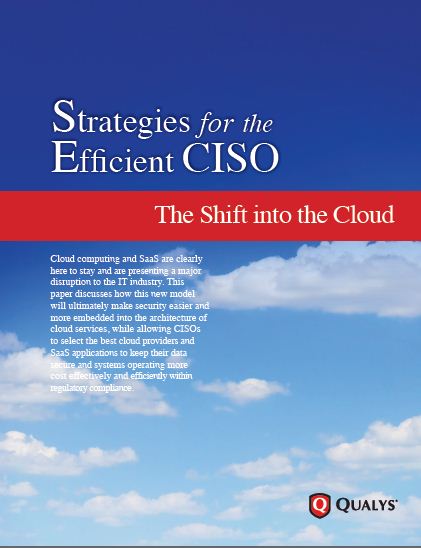
I also liked the fact that security is starting to catch on to the concept of providing information to IT and network operations teams. Security sees everything so why not communicate some of what it sees to the rest of the IT organization? The next-gen firewall conversations, usually centered on Palo Alto Networks is a perfect example of this. Another is a whitepaper that Qualys was featuring that emphasizes the strategic business efficiencies to be gained from secure cloud services.
SonicWALL also surprised me with a big honkin’ box that is loaded with application level logic. That company has come a long ways from the one that averaged 1.6 boxes per small business when I first met them.
Time to run for the airport. It was a good week – catching up with lots of friends, having great security conversations, and contributing to the Trusted Computing Group and Anti-malware sessions!
Thursday, February 17, 2011
Top 5 observations at the mid-point of RSA week

Top 5 observations at the mid-point of RSA week, or what seems to be themed NG RSA:
1. One of the fun events of RSA week happens before the show commences – the Innovation Sandbox. This event, in its second year, features 10 young companies, each staffing a small demo station and then presenting their idea on stage to a panel of judges and the audience. This year's winner was Invincea for their secure browser protection. The Innovation Sandbox experience also has a very cool idea of “speed dating” where aspiring entrepenuers get a few minutes to pitch their idea with an experienced VC. That is the kind of networking activity that made the RSA Conference famous back in the 90’s and it is awesome to see the return to supporting new innovative ideas. I recommend that every “A” round security company enter the competition next year.
2. Cisco is back to tackling big security problems with the unveiling of SecureX, their next generation security architecture. SecureX applies context gathered from network traffic and the presence of more than 150 million VPN agents to make smarter security decisions in Cisco devices. Cisco needs some help articulating a vision of how SecureX will change the life of security, IT and networking teams but there is a ton of potential and I think of this more as an exciting start for 2011.
3. According to Quest Software, “One in ten IT Professionals (10%) admit that they have accounts from previous jobs where they can still access systems even after they’ve left the organization.” For years the industry believed that Single Sign-On would be a big productivity gain by making it easier for users to connect to applications, and perhaps reduce service desk calls by reducing the number of passwords to be managed. However, perhaps the ability to easily de-provision user accounts with a single click will provide incentive for security teams to look more closely at SSO (and to be worried less about losing “the keys to the kingdom”).
4. Symantec was the company that perhaps has given me the greatest positive surprise this week with the performance and virtualization enhancements announced in SEP 12 . It is great to see companies like Symantec and Trend Micro getting out ahead of the curve when it comes to leveraging virtualization and the cloud. Symantec Endpoint Protection 12 has significant improvements based on their Insight intelligence that will keep Symantec a force for some time. The following chart is snipped out of AV Comparatives real world testing report – I have not had time to read the report for bias, but however you cut it these numbers look good for Symantec.
5. Lumension is doing some nice integration work with device discovery, application whitelisting, anti-virus, and patching features. It is very clear to me that some form of whitelisting is an essential layer of defense – it just makes too much sense to look one way while signature approaches look in the other (or vice-versa). Integrating the capabilities into an end-to-end system can fundamentally help the way IT manages endpoints and conducts incident response investigations.
I have to say that this has been an excellent week at RSA. The only real complaints are the weather – rain, cold and overall yuck – and the fact that every booth has to have “cloud” or “next generation” in its signage. Must be some sort of RSA Conference zoning regulation for booth rentals.
Wednesday, February 16, 2011
Early Vibe: Mykonos
My RSA week started off on the right foot with an early Tuesday morning meeting with Mykonos Software. This is an exciting young pre-A round company with an interesting idea for cutting off custom-designed web application attacks before they can be launched. It is an intriguing approach to web application security that is likely to please organizations that want to say goodbye to cross site scripting and SQL injection attacks.
It is surprising that the intuitive Mykonos solution has not been tried more often. Mykonos offers an appliance that monitors outbound web traffic for the presence of forms and validates that the completed inbound form does not carry malware. The product salts the web form with what it refers to as “detection points”, allowing the solution to recognize malicious changes to the form when it is returned to the application. Attackers that are testing their attack code are identified, permanently tagged, and future activity blocked before the attack development completes and launches. Mykonos does not require “scan and hope” signatures and does not rely on interpretation of application behavior – if the detection points have been modified then there is no question about unauthorized activity.
There are benefits of the Mykonos approach over traditional web application firewalls:
+ Mykonos does not have to learn web application behavior or understand the business logic expressed in the web dialog. This significantly simplifies the administration and reduces false positives that can plague other web application firewalls.
+ IT does not have to coordinate changes to the dynamic web site with security – the Mykonos appliance just recognizes the presence of a form and applies its detection points-based logic. Traditional solutions that are dependent on rules or learning mode struggle to keep up with the rate of change of dynamic web sites.
+ As a start-up with a new idea, Mykonos can tap into existing enterprise PCI-driven line item budgets for web application firewalls.
The intelligence gathered on the attackers, their locations and attack methods, gives the company nice flexibility going forward. They still have challenges such as ensuring that attackers can’t recognize detection points to by-pass the security mechanisms, or improving the catch rate of already developed attacks. The Mykonos idea has a lot going for it, without requiring cumbersome rules. With proper execution, Mykonos will have a fun 2011.
It is surprising that the intuitive Mykonos solution has not been tried more often. Mykonos offers an appliance that monitors outbound web traffic for the presence of forms and validates that the completed inbound form does not carry malware. The product salts the web form with what it refers to as “detection points”, allowing the solution to recognize malicious changes to the form when it is returned to the application. Attackers that are testing their attack code are identified, permanently tagged, and future activity blocked before the attack development completes and launches. Mykonos does not require “scan and hope” signatures and does not rely on interpretation of application behavior – if the detection points have been modified then there is no question about unauthorized activity.
There are benefits of the Mykonos approach over traditional web application firewalls:
+ Mykonos does not have to learn web application behavior or understand the business logic expressed in the web dialog. This significantly simplifies the administration and reduces false positives that can plague other web application firewalls.
+ IT does not have to coordinate changes to the dynamic web site with security – the Mykonos appliance just recognizes the presence of a form and applies its detection points-based logic. Traditional solutions that are dependent on rules or learning mode struggle to keep up with the rate of change of dynamic web sites.
+ As a start-up with a new idea, Mykonos can tap into existing enterprise PCI-driven line item budgets for web application firewalls.
The intelligence gathered on the attackers, their locations and attack methods, gives the company nice flexibility going forward. They still have challenges such as ensuring that attackers can’t recognize detection points to by-pass the security mechanisms, or improving the catch rate of already developed attacks. The Mykonos idea has a lot going for it, without requiring cumbersome rules. With proper execution, Mykonos will have a fun 2011.
Thursday, February 10, 2011
RSA Conference 2011 is next week

I hope to see everyone in San Francisco next week during the RSA Conference 2011 festivities. I am so glad to have RSA return to its February dates - I am in big time need of a warm sun, green grass, and lively security discussions!
I am participating in a couple of sessions that I’m very excited about:
Monday finds me moderating a panel of network security experts for the Trusted Computing Group’s workshop on IF-MAP. This is good stuff with the content provided by industry experts and not vendors. It would be well worth your time on Monday to check out: TCG-001 – Can You Trust Your Enterprise? Top Analysts & Implementers Debate Using Trusted Computing is in Orange Room 301 starting at 11:00.
Friday is my presentation on the demise of HIPS. It is sad, but the time has come with the retirement of Cisco CSA. I’ve put some intriguing ideas on how to use whitelisting to plug some of the holes that AV misses. The details: TECH-403 – Is it Time to Put HIPS in the Recycle Bin? is Friday at 11:20 in Orange Room 307.
RSA is easily the best security event of the year – if you can only go to one event, this is the one to choose. Please take advantage of resources that can be critical to your plans for 2011:
Seek out networking opportunities with fellow security professionals. Share experiences and plans – you will be surprised at the tips you will pick up.
Attend sessions that broaden your security knowledge. This is a fabulous chance to learn about security issues before they become a challenge for your business. In particular, I would recommend Steve Orrin’s session on virtualization security as well as sessions from the Cloud Security Alliance. The lineup of sessions with abstracts is found here.
Talk with vendors in the exhibit hall for demos and discussions with how the product can work in your environment.
Enjoy the show and I hope to see you there!
Thursday, January 27, 2011
Early Vibe: CloudPassage
CloudPassage, a Bay area startup, has just exited stealth this week with a proposition to simplify security for cloud-based servers. The problem, according to the vendor, is that vulnerability management and firewall policy enforcement both suffer as application servers are dynamically launched and shuffled between data centers. For instance, the ability for enteprises to reach their applications in the cloud to frequently assess and manage server vulnerabilities or to enforce server-based security policies both suffer.
The secret sauce of the CloudPassage SaaS technology features a cloud-based analytic grid that continuously correlates server configurations with vulnerability information and customer security policies - offloading individual servers from that burden. CloudPassage initially offers two products, Halo SVM and Halo Firewall:
Halo SVM (Server Vulnerability Management), depends on a host-based agent to initiate communications with the CloudPassage grid. The agent profiles the Linux or Unix server, and uploads that information to the CloudPassage grid for analysis. The end benefit is a vulnerability management procedure that transparently evaluates applications for vulnerabilities and configuration drift with a higher frequency than scanning options can reasonably achieve.
Halo Firewall is a host based firewall that is designed to travel with cloud-based servers to enforce security policies. Similar to SVM, the Firewall product connects to the CloudPassage grid to download the most recent set of policies for the server.
The Ogren Group believes that CloudPassage is on the right track. Enterprise applications are evolving from customer premise-based services to hybrid environments and public clouds, yet the evolution of static security perimeters and scheduled vulnerability management isn’t evolving at the same pace. Placing the burden of analysis in the cloud as a SaaS allows CloudPassage to avoid distribution overhead to servers while assessing vulnerability information, server configurations, and customer policies for each server (and there will be plenty of opportunity to add additional security computations). CloudPassage does have challenges to overcome, starting with expanding its solution capability to include support for Windows servers and also an agentless option for those that can’t tolerate additional software on a server. The company is very young with a grid capability that provides potential for excellent flexibility in responding to securing the cloud.
The secret sauce of the CloudPassage SaaS technology features a cloud-based analytic grid that continuously correlates server configurations with vulnerability information and customer security policies - offloading individual servers from that burden. CloudPassage initially offers two products, Halo SVM and Halo Firewall:
Halo SVM (Server Vulnerability Management), depends on a host-based agent to initiate communications with the CloudPassage grid. The agent profiles the Linux or Unix server, and uploads that information to the CloudPassage grid for analysis. The end benefit is a vulnerability management procedure that transparently evaluates applications for vulnerabilities and configuration drift with a higher frequency than scanning options can reasonably achieve.
Halo Firewall is a host based firewall that is designed to travel with cloud-based servers to enforce security policies. Similar to SVM, the Firewall product connects to the CloudPassage grid to download the most recent set of policies for the server.
The Ogren Group believes that CloudPassage is on the right track. Enterprise applications are evolving from customer premise-based services to hybrid environments and public clouds, yet the evolution of static security perimeters and scheduled vulnerability management isn’t evolving at the same pace. Placing the burden of analysis in the cloud as a SaaS allows CloudPassage to avoid distribution overhead to servers while assessing vulnerability information, server configurations, and customer policies for each server (and there will be plenty of opportunity to add additional security computations). CloudPassage does have challenges to overcome, starting with expanding its solution capability to include support for Windows servers and also an agentless option for those that can’t tolerate additional software on a server. The company is very young with a grid capability that provides potential for excellent flexibility in responding to securing the cloud.
Wednesday, December 29, 2010
Catching the Wave
You have to admire the perseverance of a vendor whose vision is miles ahead of the market, and then fights, scratches, claws, and just hangs on until they find customer traction. This has been the case with Wave Systems, an early evangelist of placing and managing keys in secure hardware, particularly the TPM as defined by the Trusted Computing Group. For Wave there has always the lingering question of “if the idea is so good, why aren’t companies buying”? Well, it looks like the time has come and they’re now underway with two primary use cases:
Secure remote access with intrinsic two-factor authentication. Using the secret key from the TPM turns the laptop into the “something you have” factor to go along with the password (“something you know”). Enterprises not only save money by reducing token purchases, they also gain secure access while giving users and security administrators one less thing to worry about.
Transparently encrypt the hard drive of remote users. Enterprises that need to protect intellectual property or regulated data on laptops are getting tired of trying to administer DLP or DRM at the endpoint. A simpler solution is to transparently encrypt data on the hard drive using a secret key from the TPM. It is more secure, easier to manage, and may cost less. The most noteworthy implementations support Bitlocker and Samsung and Seagate self-encrypting hard drives.
Wave Systems sells software that makes administration of keys and TPMs practical for larger organizations that need to secure remote access and locally stored data. They’re moving forward and have some impressive references to their credit, including Mazda, Papa Gino’s, and Boston Medical Center. It’s nice to see their perseverance paying off.
Secure remote access with intrinsic two-factor authentication. Using the secret key from the TPM turns the laptop into the “something you have” factor to go along with the password (“something you know”). Enterprises not only save money by reducing token purchases, they also gain secure access while giving users and security administrators one less thing to worry about.
Transparently encrypt the hard drive of remote users. Enterprises that need to protect intellectual property or regulated data on laptops are getting tired of trying to administer DLP or DRM at the endpoint. A simpler solution is to transparently encrypt data on the hard drive using a secret key from the TPM. It is more secure, easier to manage, and may cost less. The most noteworthy implementations support Bitlocker and Samsung and Seagate self-encrypting hard drives.
Wave Systems sells software that makes administration of keys and TPMs practical for larger organizations that need to secure remote access and locally stored data. They’re moving forward and have some impressive references to their credit, including Mazda, Papa Gino’s, and Boston Medical Center. It’s nice to see their perseverance paying off.
Monday, July 26, 2010
Checking out PacketMotion
PacketMotion came by my office in Stow last week, leading to a lively discussion on the direction of network security. The company, founded in 2004 with its flagship PacketSentry product at version 4.0, has been around too long for Early Vibe status in this blog. However, PacketMotion is embracing a few unique ideas that may give security teams the flexibility they need to meet corporate functionality and cost-of-ownership requirements.
Corporate networks are dynamic as IT gains flexibility with wireless access, virtualizes applications and desktops, and increasingly relies upon browser-based cloud applications to support the business. This trend changes access paths between users and applications, and challenges security that is based on static addresses.
User Activity orientation allows IT to focus on securing business policies of users and applications. PacketSentry integrates with Active Directory to monitor user traffic to applications, with the option of killing non-compliant connections. Security policies are less dependent on the network infrastructure and are more easily mapped to business requirements.
Virtual Segmentation features provide a virtual PCI-compliance partitioning of resources by automatically monitoring and enforcing user activity to regulated applications and data repositories. That is, rather than deploying internal firewalls and replicating security mechanisms in the network, PacketMotion’s virtual segmentation helps assure that users and programs do not step out of bounds and access unauthorized business resources.
Automate compliance reporting with significant cost savings. Compliance mandates are designed to ensure the security of a business process and confidential data. Traditionally this has been done in a bottom-up manner starting with individual security products and then aggregating and correlating results into an overall business view. PacketMotion’s top-down approach reporting user and application activity across a broad range of protocols saves IT a lot of pain and can significantly reduce the burden of compliance reporting.
PacketMotion does a lot of things. In fact, one of their larger challenges is defining a strong position in the marketplace that also addresses priorities in security budgets. Since PacketSentry is a network appliance in the datacenter that looks at and records activity there will be pressure to place the company into a SIEM bucket (because it records activity), an NBAD bucket (because it can detect and terminate unauthorized behavior), or an automated GRC bucket (because it automates compliance). The company has good leadership and will find its way, but for now its differentiators are worth examining for forward-thinking security teams.
Corporate networks are dynamic as IT gains flexibility with wireless access, virtualizes applications and desktops, and increasingly relies upon browser-based cloud applications to support the business. This trend changes access paths between users and applications, and challenges security that is based on static addresses.
User Activity orientation allows IT to focus on securing business policies of users and applications. PacketSentry integrates with Active Directory to monitor user traffic to applications, with the option of killing non-compliant connections. Security policies are less dependent on the network infrastructure and are more easily mapped to business requirements.
Virtual Segmentation features provide a virtual PCI-compliance partitioning of resources by automatically monitoring and enforcing user activity to regulated applications and data repositories. That is, rather than deploying internal firewalls and replicating security mechanisms in the network, PacketMotion’s virtual segmentation helps assure that users and programs do not step out of bounds and access unauthorized business resources.
Automate compliance reporting with significant cost savings. Compliance mandates are designed to ensure the security of a business process and confidential data. Traditionally this has been done in a bottom-up manner starting with individual security products and then aggregating and correlating results into an overall business view. PacketMotion’s top-down approach reporting user and application activity across a broad range of protocols saves IT a lot of pain and can significantly reduce the burden of compliance reporting.
PacketMotion does a lot of things. In fact, one of their larger challenges is defining a strong position in the marketplace that also addresses priorities in security budgets. Since PacketSentry is a network appliance in the datacenter that looks at and records activity there will be pressure to place the company into a SIEM bucket (because it records activity), an NBAD bucket (because it can detect and terminate unauthorized behavior), or an automated GRC bucket (because it automates compliance). The company has good leadership and will find its way, but for now its differentiators are worth examining for forward-thinking security teams.
Monday, June 28, 2010
CoreTrace webcast on June 28th!
There has been a ton of interest in application whitelisting lately, especially with security-savvy organizations reacting to the Cisco Security Agent end of life scheduled for the end of 2010. Those folks know that they cannot rely totally on AV, but they also know they need a proactive approach that can be managed across the enterprise without breaking the bank.
CoreTrace is a leading application whitelisting vendor that does some pretty cool stuff at low levels. The webcast on Tuesday, June 28th is well worth an hour. Check out all of the details here:
http://www.coretrace.com/resources/webinars/CoreTrace_Webinar--Transitioning_from_Cisco_Security_Agent.aspx
CoreTrace is a leading application whitelisting vendor that does some pretty cool stuff at low levels. The webcast on Tuesday, June 28th is well worth an hour. Check out all of the details here:
http://www.coretrace.com/resources/webinars/CoreTrace_Webinar--Transitioning_from_Cisco_Security_Agent.aspx
Subscribe to:
Posts (Atom)

 Posts
Posts